
Table of Contents
The email problem most platforms ignore
You just sent a 50%-off promotion to your whole list.
It went to the new customer who paid full price two weeks ago. It went to the lead who has opened every email and hasn't clicked on anything yet. It went to the loyal customer who's been with you for three years and would have stayed at any price. It went to the person who only signed up for your free weekly newsletter and doesn't want product promotions at all.
Some of those people are happy. The discount-hunter is in. Some are confused. The customer who paid full price two weeks ago is wondering whether to ask for a refund. Some are so annoyed that they click unsubscribe instead of the link. The newsletter-only subscriber crosses you off entirely.
This is what one-size-fits-all email marketing looks like when you dig into the metrics. The open rate looks fine. The unsubscribes don't seem catastrophic. But the truth is, your list keeps shrinking by the people who would have stayed if you'd just sent them the right thing.
Now flip it. Open a contact in your platform and try to find out where they actually are in their journey with you. You can see they bought something six months ago. You can see they opened the last email. Beyond that, the picture goes blurry. Maybe you can see the last 50 actions if your platform shows that much. Maybe you can guess from the tags they have or don't have. The reality of what this contact has done with your business is partial at best.
This cycle, we shipped two updates to Kajabi Email that fix both ends of that picture. The sender finally sees the full contact story. The subscriber finally has a real say in what they receive.
Why every send feels like a coin flip
Most email marketing tools treat the audience as a list with a single switch. Either someone is on it or off it. Tags help a little. Segmentation helps a little more. The real shape of an audience, what each person has actually done, where they are in their relationship with the business, what they actually want from you, has been mostly invisible to the sender.
When the sender can't clearly see the audience, three things happen.
First, every send becomes an averaged decision. You write to the rough middle of your list because you can't see the edges. The people who would have wanted something specific don't get it. The people who didn't want something get it anyway.
Second, segmentation work falls on the sender. You build tagging schemes. You manually maintain lists. You write your own logic for "people who bought X but not Y." You become an unpaid data analyst on top of being a business owner.
Third, the subscriber has no say in what arrives. The tools they have are blunt: stay subscribed to everything, or unsubscribe from everything. When the cost of staying is too much noise, they leave entirely. The platform measures the unsubscribe but never sees what they would have stayed for.
The combined effect is a slow erosion of email as a channel. Lists shrink. Engagement drops. Senders compensate by sending more, which accelerates the erosion. Most experts have learned to live with this as the cost of doing business by email. It doesn't have to be that way.
This cycle's updates give both sides of the relationship more to work with. The sender sees the full contact. The subscriber controls what arrives.
What we believe email should do
Email is a relationship.
When someone gives you their email address, they're saying yes to a conversation. The platform's job is to help that conversation stay relevant on both sides. That means giving senders a real picture of the audience they're writing to. It means giving subscribers a real say in what they receive. It means treating "stay subscribed" and "unsubscribe" as two ends of a spectrum that has a lot of better answers in the middle.
This belief sits inside a broader principle that runs through how we build at Kajabi: the tools should match the work. The work of email isn't sending a campaign. It's maintaining a long-running, mutual relationship with people who choose to hear from you. The platform should make that relationship easier to keep over time.
The two updates this cycle each take a side of the relationship. Contact Lifecycle Tracking gives senders the picture they've been missing. Email Preference Controls give subscribers the choice they've been missing. Together, they shift email from a one-way blast into a real conversation.
What's new in Kajabi Email
Two updates this cycle. One serves the sender. One serves the subscriber. Both reduce the loss between them.
Contact Lifecycle Tracking
.webp)
Every contact has a story. You can finally see all of it.
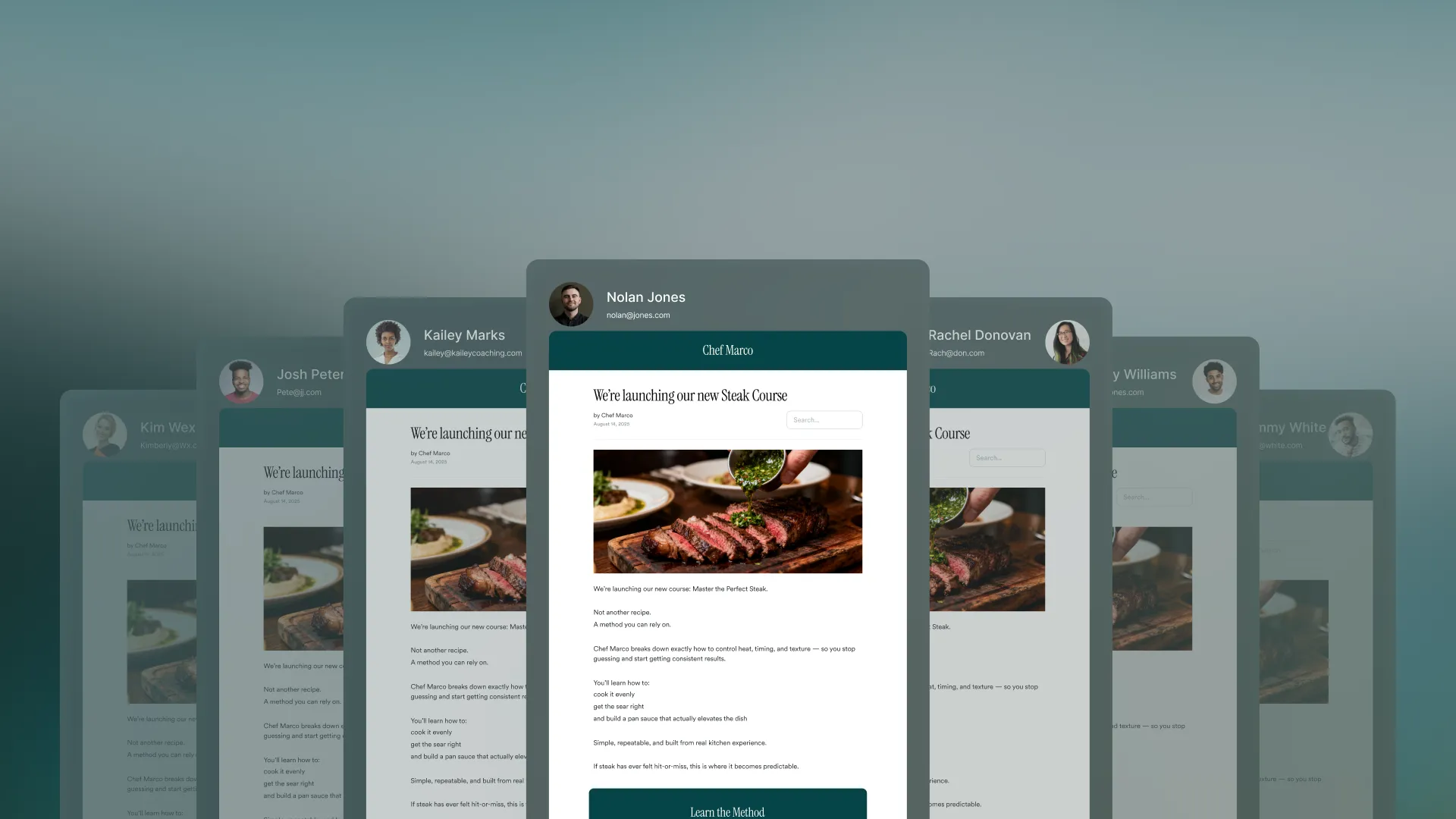
Open a contact in Kajabi, and the lifecycle view shows the full activity history. Form submissions. Purchases. Email opens. Offer purchases. Event registrations. Assessment results. Up to 500 actions, in chronological order, with the full context behind each one. The previous limit of 50 is gone.
Filter the timeline by action type to see specific patterns. Want to see every offer this contact has bought? Filter by Offer Purchase. Want to see how engaged they've been with email lately? Filter by Email Delivery. Want to see where they came in from? Filter by Form Submission. The lifecycle becomes legible rather than guessed.
Lifecycle stages are now first-class. Manage your audience by where each contact actually stands: lead, buyer, repeat customer, or lapsed. Lifecycle stages sit alongside tags and lists as a first-class way to group people.
The biggest unlock is broadcast targeting. When you draft a broadcast, you can now segment the audience using tags, filters, and lifecycle stages together. A lead who hasn't purchased gets a different email than a repeat buyer. A lapsed subscriber receives a re-engagement message instead of a promotion. The right message reaches the right people without you having to maintain six parallel lists to make it happen.
Email Preference Controls
The other side of the relationship is the subscriber.
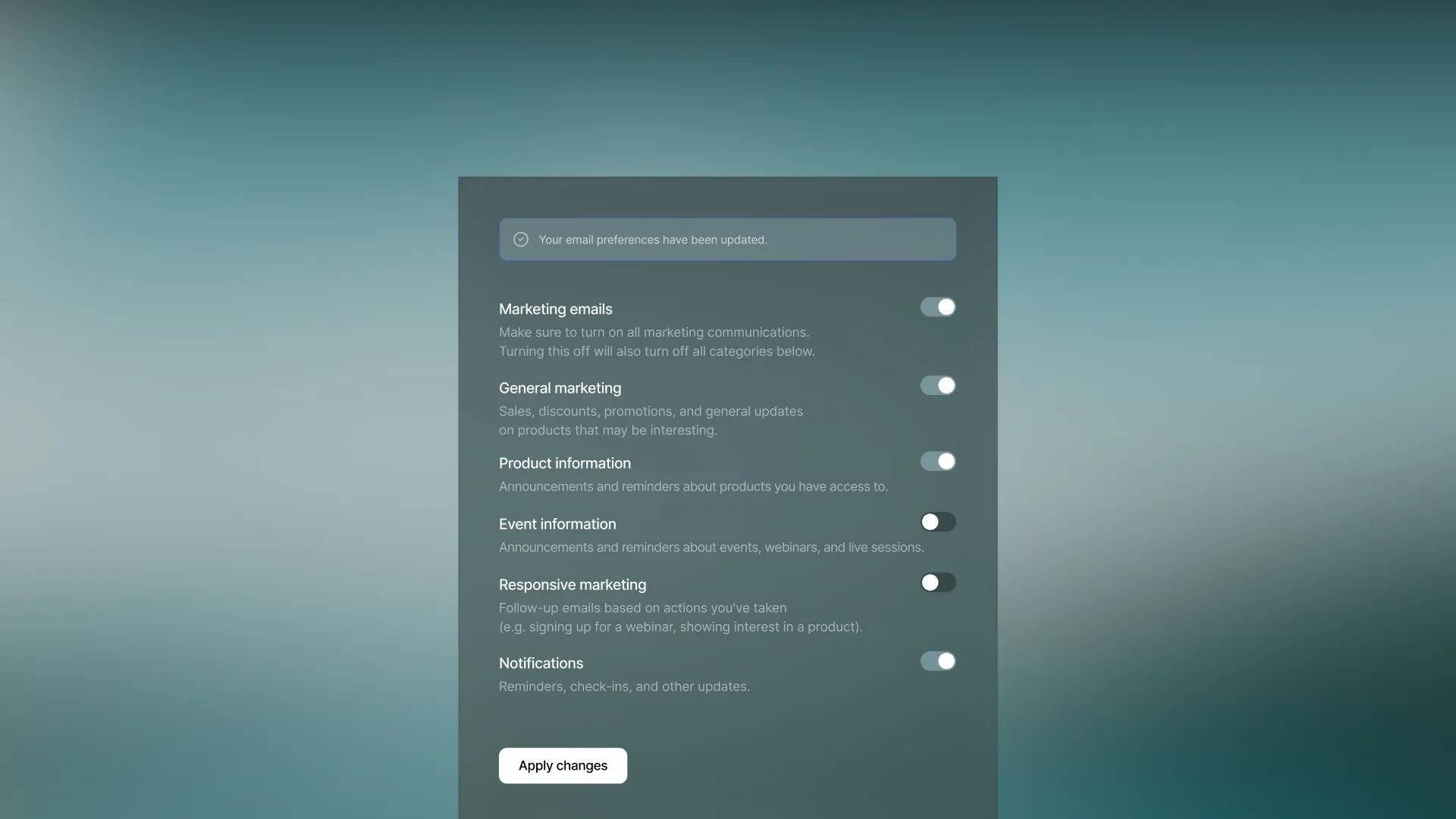
Email Preference Controls let your subscribers choose which types of emails they receive. Marketing promotions yes, product updates no. Responsive marketing yes, event invites no. Whatever combination matches what they actually want from you. Simple toggles. Granular preferences.
The result is that "unsubscribe" is no longer the only off-switch. A subscriber who's frustrated by promotional volume can opt out of promotions while staying subscribed to product updates. The relationship stays intact. The list keeps the value.
For the sender, the deliverability impact is the harder-to-see win. Email providers reward senders whose recipients engage with their messages. When subscribers receive only the email types they want, engagement increases, complaints decrease, and inbox placement improves over time. Lower unsubscribes are the visible win. Better deliverability is the compounding one.
This is rolling out in beta starting now, with full availability later this cycle. If you don't see the preference center yet, it's coming.
Who these updates are built for
Different experts will get different value from this set. A few scenarios where the changes matter most.
Subscription and membership businesses. Where a contact is in their lifecycle is the most important fact about them. New subscriber, active member, lapsed, reactivated. Lifecycle stages let you write to each one as a distinct group. Re-engagement campaigns, onboarding sequences, and win-back flows all become easier to build and measure.
Promotion-heavy businesses. Course launches, flash sales, seasonal pushes. The cost of a misaligned promo is unsubscribes from people you wanted to keep for the long haul. Email Preference Controls let those subscribers opt out of promotional emails specifically, while staying on for product updates and educational content. You keep more of the relationships you've worked to build.
If your business runs on email, both updates compound. The sender sees clearly. The subscriber chooses freely. The list stays healthy.
How to start sending smarter today
Contact Lifecycle Tracking is live. Email Preference Controls are rolling out in beta. The fastest way to put both to work:
- Open a contact you know well. Browse the full lifecycle. See what's been there all along.
- Filter the contact's timeline by Offer Purchase. See the buying pattern.
- Draft a broadcast. Use the segment filters to target a specific lifecycle stage rather than the entire list. Send to leads only or to repeat customers only.
- Watch for Email Preference Controls in your settings as the beta reaches your account. When it lands, decide which email types you want to expose as toggles.
- Audit your most recent five sends. How many were the right message for the right cohort? How many would have been better targeted?
Spend an hour with the lifecycle data. Most experts find a pattern they didn't know was there. An entire cohort of lapsed customers who never received a re-engagement email. A segment of high-engagement leads who never got a focused offer. The picture has been there. The platform just couldn't show it before.
The bigger picture: email is the channel where the relationship lives between everything else you ship. Course launches. Community posts. Newsletter cadences. Promo windows. The platform's job is to keep that relationship healthy, not just to send the campaigns. This cycle's updates take a real step toward that.
Future cycles will continue to build on the lifecycle layer. Smarter automations. Better recovery. More subscriber control. The work continues.