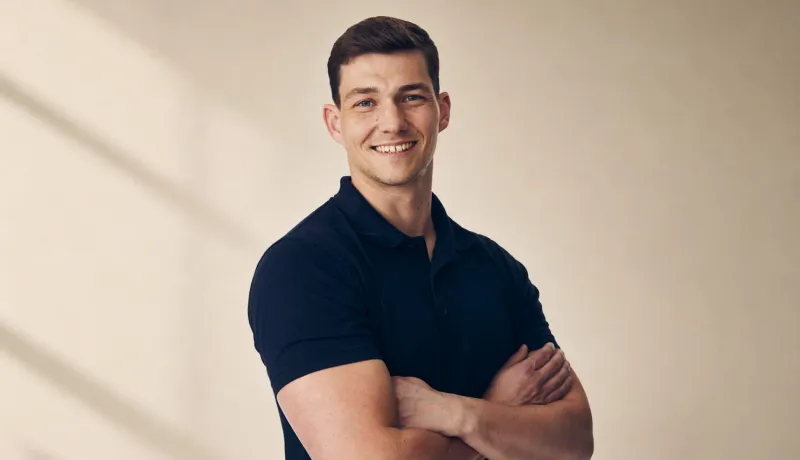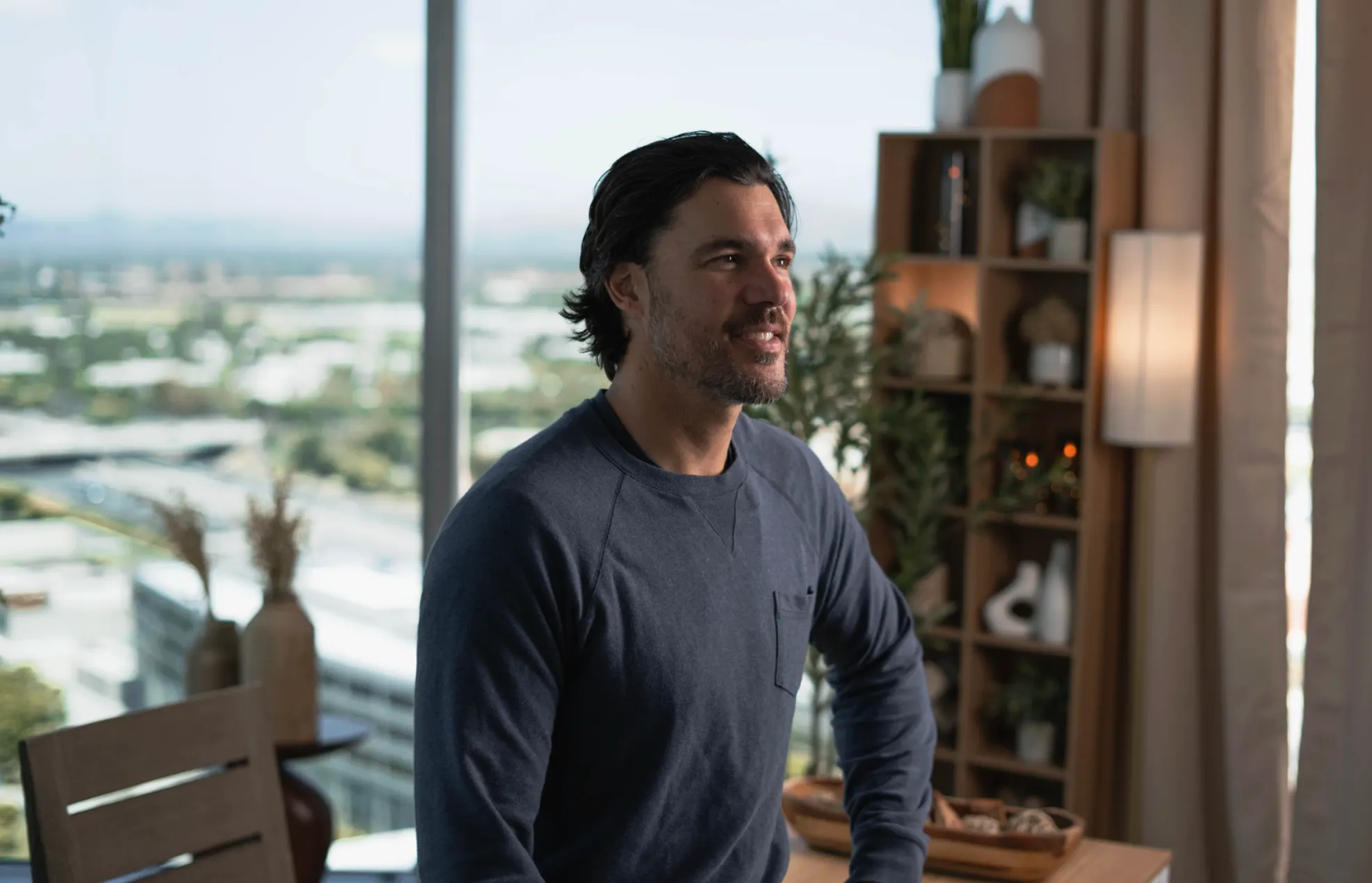

Some businesses start with a spreadsheet and a market opportunity. Ryan Peebles' started with something more personal than that. A long road through his own back pain, a deep desire to help others find the way out, and a decision to keep going no matter what.
That decision led him to build Core Balance Training, an online program for people with chronic lower back pain. It also led him to $10M in lifetime revenue, 50,000 students, and a life he genuinely loves. But the part that sticks with you isn't the number. It's the folder.
Ryan keeps a folder filled with testimonials from students who canceled scheduled back surgeries because they finished his course first.
That's the whole story, really. Everything else is just how he got there.
The Part Where Back Pain Became His Superpower
Back pain took a lot from Ryan before he ever thought about building a business around it. At 16, it sidelined him from basketball. In his early twenties, it made him give up surfing for two years. Not a hobby. His identity. He describes that period as one of the toughest of his life.
The medical system kept pointing him toward appointments and temporary fixes. Nothing addressed what was actually happening. So Ryan, being Ryan, decided to become his own expert.
He went deep. Books, research, blogs, online resources. He pieced together an understanding of chronic back pain that was more comprehensive than what most clinicians were offering him. He started going to physical therapy appointments and realizing he could teach his therapists things.
"It was a really weird shift," he says. "I had done so much research and so much self-help that I was able to offer value to professionals."
That moment clarified everything. He got credentialed, launched Core Balance Training in 2016, and made a bet that the internet was the right place to reach people with this problem. Back pain isn't something you fix in a 45-minute office visit. It's something you work on at home, in your daily life, every day. An online course fit that reality perfectly.
He was right. He just didn't know yet how right he was.
Filming Videos in a Garage and Choosing to Never Quit
In 2017, Ryan filmed his first course videos in the garage he was living in. He was working per diem as a physical therapist, just enough to cover rent, and channeling everything else into building something he deeply believed in. Three students that first year. A few more the next.
And yet.
"From day one, I said, 'I'm never going to quit.' No matter what happens. I'm going to fail, I'm going to get up, and I'm going to keep going. The only way I can guarantee success is if I never quit."
He says it matter-of-factly, the way people talk about things they've already proven to themselves. It's not a motivational line. It's just what he decided, in a garage, alone, before anyone was watching.
By 2020, COVID had arrived and transformed the world's appetite for at-home health solutions. Ryan had already made that bet years earlier. He had 60 students that year, was doing six to eight sales calls a day, closing three, and felt for the first time the unmistakable feeling of something working.
He called his ads manager: "We're doing this. I'm getting out of the hamster wheel."
The Burnout, the Honeymoon, and the ATM Machine
Here's the thing about phone-based sales at scale: the ceiling arrives faster than you expect. Ryan was closing deals, but he was also exhausted. By the end of 2020, burnout had caught up with him.
In 2021, he stepped away. Traveled through New Zealand with his now-wife. Reflected.
"The best way to treat burnout is to prevent it," he says now, with the clarity of someone who learned that the hard way. "You've got to balance your life."
He came back with a plan. Build a funnel that didn't require his voice on every call. Lower the price. Add a seven-day free trial. Trust that the value of the content could do what the calls used to do.
In 2022, Ryan got married and launched the free trial. He was on his honeymoon when the numbers started moving.
Five sales one day. Eight the next. Ten. Twenty. Forty. Sixty in a single day.
"It becomes an ATM machine," he says, still a little delighted by it. "You put a dollar in, two dollars come out."
The $1M milestone arrived in August 2023. The $5M milestone in October 2024. By November 2025, Core Balance Training had crossed $10M in lifetime revenue. Students in Australia, the UK, Canada, Europe, India. A whole city's worth of people, all learning how to get out of pain from wherever they are in the world.
What 50,000 Students Actually Looks Like
Ryan's face changes a little when he talks about his students.
"We've had people write to us who said they're still here because they found a way out of the pain." He pauses. "Those are the ones that make me stop everything for a minute and just reflect."
The testimonials he treasures most are the ones from people who canceled scheduled back surgeries after going through the course. He has a whole folder of them. He also gets emails from people who can pick up their grandchildren again, play with their kids, get back to the activities that made them feel like themselves.
"We don't even ask for testimonials," he says. "They just send us an email. Being able to change people's lives like that is... it's an honor."
More than 50,000 people have been through Core Balance Training now. A 90-plus percent success rate. And the business itself is beautifully simple. One course. One membership. A community inside Kajabi called the Student Hub. One price, no sales.
"We're the In-N-Out Burger of online courses," Ryan says, grinning. "Keeping it simple has been really helpful. As a company grows, the complexity gets out of control. Simplicity is how we stay sane."
Why He Went All In on One Platform
Ryan found Kajabi the way he finds most things: through obsessive research. He compared platforms, ran the free trials, and ended up in a live chat with someone he suspected was the CEO.
"I was like, are you kidding me? I'm sold."
He switched from a patchwork of tools in 2020 and never looked back. Before Kajabi, he was stitching together ConvertKit for email, a separate platform for the course, and other tools to fill the gaps. It worked, until the growth exposed all the seams.
"Something that's a little bit more complex becomes way more complex once you add layers and layers of growth. It was a massive headache."
Five years in, Core Balance Training runs 200 tags and somewhere between 1,000 and 1,500 automations inside Kajabi. Ryan still personally uploads every new course lesson. He checks the dashboard every morning. His sister, who now works with him, jokes that they've basically helped shape the product roadmap. Features they requested, like checkout page customization and deep links, showed up in the platform not long after.
"We are basically married," Ryan says, laughing. "If Kajabi disappeared tomorrow, it would take me six months to a year to rebuild what I have now. That's how integrated we are."
His favorite feature? The mobile app. His big-picture take on the platform?
"The last thing you want is technical software to be a ceiling for you. There is no ceiling with Kajabi. I don't think I'll ever reach it."
What He'd Tell You If You're Still Sitting on Your Idea
Ryan doesn't traffic in hustle-culture motivation. His advice is warmer than that, and more useful.
"When I first started, I cared so much about little details that just don't really matter. What people want is the solution to their problem. They don't care what color the font is. If you can provide value to them, that's all they want."
On starting before you're ready: "Progress over perfection. Get stuff out there. Put it out imperfect, then iterate. You tweak and optimize after it's out there, not before."
On whether your idea is worth pursuing: "Does it solve a problem? Look for the gap in your industry where the problem is still not getting solved. It may seem like all the ideas are taken. That's actually the opposite of the truth. There are more problems now than ever before."
And if you're worried it's going to be hard: it will be. Ryan describes entrepreneurship as "chewing glass" at times. But he also says something else that lands differently.
"Surfing motivated me to heal my back. But now healing people is my passion, and surfing is actually secondary. I never would have thought that in my whole life."
He built something trying to get back to the thing he loved. What he found, on the other side of all of it, was something he loves even more.
That's worth something.